
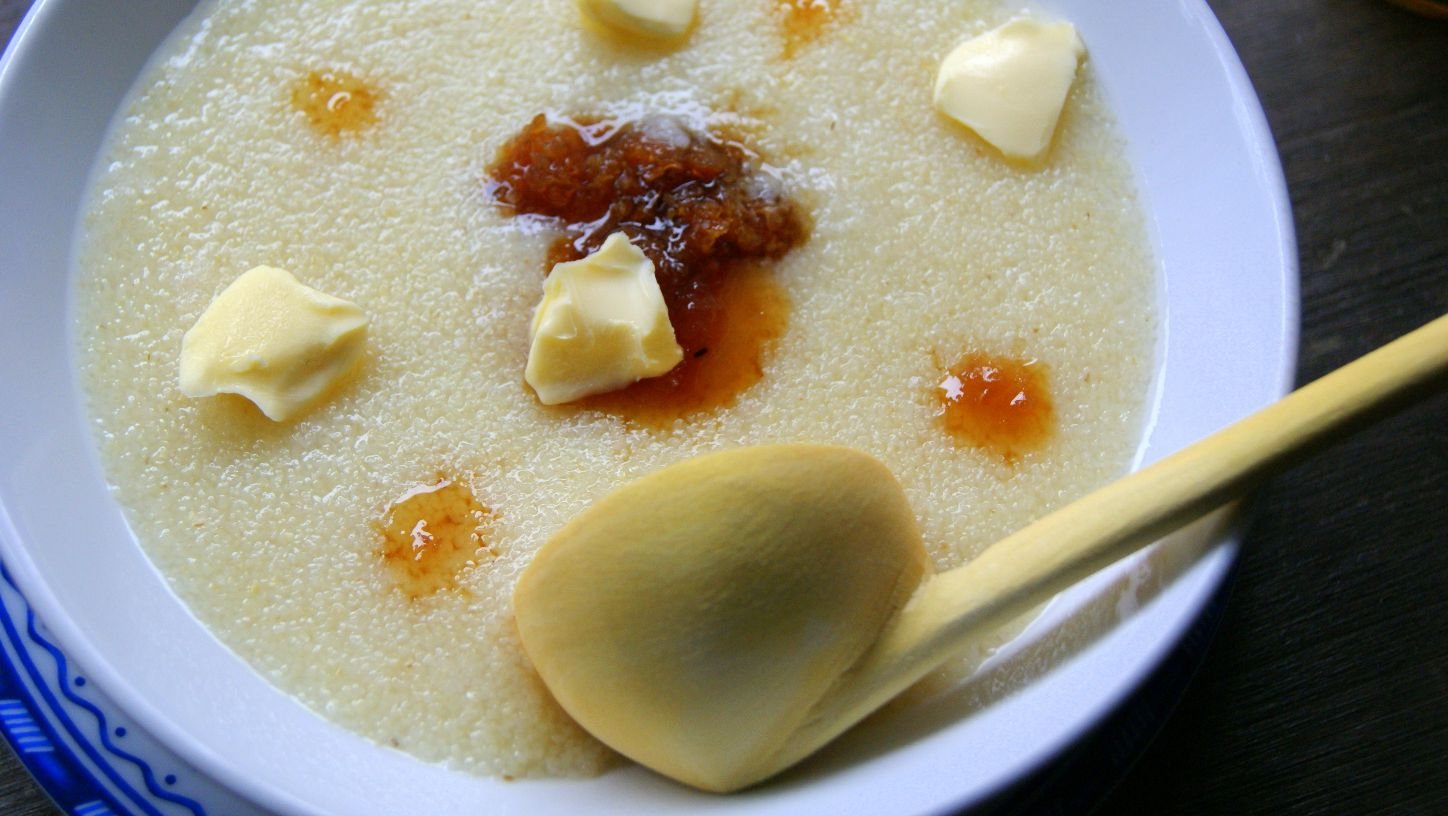
Moroccan Assida: A Warm Semolina Porridge

Assida, known also as La’assida or L’a’ssida, is a rich and comforting semolina porridge enjoyed in many Arab cultures. The dish consists of simple ingredients, primarily semolina, water, and salt, yet when complemented with butter and honey, it transforms into a delightful treat. For those who indulge in more sweet flavors, servings of honey can be offered on the side.
Exploring Assida: Tradition and Celebration
Traditionally, Assida is served during breakfast on Eid al Mawlid in Morocco, Algeria, and Tunisia, honoring the birth of the Prophet Muhammad ﷺ. This festive occasion makes the dish especially significant with its comforting warmth that family loves, particularly on colder days.
Creative Uses for Assida: From Breakfast to Dessert
As it cools, Assida thickens, leading to various creative uses. If you wander through the streets of Fez, you’ll likely encounter vendors selling cold squares of this pudding, often dusted with sugar and cinnamon—an irresistible treat for children post-school. Alternatively, you can enhance the dish by mixing in raisins or sultanas to create a flavorful pudding perfect for dessert. Simply invert it onto a serving dish and embellish it with caramelized nuts for a stunning presentation.
Should dinner feel like a chore, thin leftover Assida with water or milk and warm it up; it converts into a nourishing vegetarian soup swiftly.
Assida vs. Tagoulla: Understanding the Difference
While Assida is crafted with medium-caliber durum wheat semolina, Tagoulla, a classic Amazigh dish, is made from cracked corn or various grains. This variant requires more cooking time and is typically eaten by hand, reflecting traditional practices. However, Assida, with its smoother consistency, demands a spoon for serving, often enjoyed warm.
Ingredients for Moroccan Assida
- 1/2 lb coarse semolina (available on Amazon – durum wheat)
- 1 1/2 tsp salt (or to taste)
- 4 cups water
For Serving:
- 1/2 cup honey
- 1/4 cup butter (in cubes, can substitute with olive oil)
Preparation Method for Assida
- Begin by selecting a deep saucepan with a heavy base. The semolina will expand significantly during cooking.
- Bring the water to a rolling boil. For efficiency, consider using a kettle to pre-boil the water before adding it to the saucepan.
- Gradually add the semolina to the boiling water while stirring continuously over medium heat. It’s essential to keep stirring to prevent lumps from forming.
- Allow the mixture to simmer for about 20 minutes. Stir frequently, adjusting the heat as needed, until the semolina becomes tender and has a creamy texture.
Serving Direction for Assida
Serve the Assida warm, with honey and butter on the side for drizzling. Feel free to explore creative variations by adding nuts or spices according to your preference. This dish is not only a delightful breakfast but also versatile enough for lunch or a cozy snack.

Do you have any ideas or suggestions? Share them with us in the comments